
Sound Preference: a new dimension in personalized hearing care
Research shows that up to 40% of people have a strong preference for one sound design over another. A preference that cannot be predicted by audiogram, lifestyle, or demographics. It must be experienced. Reach out to your local representative or explore the full Sound Preference website to learn more about how Sound Preference can benefit your clinic.
Preference is everywhere
Some people boost the bass until they really feel the music. Others want every note exactly as the artist intended. Some snap a photo and leave it untouched; others instantly reach for a filter to bring out color, warmth, or contrast.
We all tailor the world to match our personal preference. So why should hearing aids be any different?
People experience sound differently, and their preferences reflect that.
When it comes to hearing, one size doesn’t fit all - and now we have the evidence
Sound preference reflects how individuals, independent of lifestyle or demographics, respond differently to the way sound is processed. Understanding and incorporating this into clinical practice can support stronger conversations, improved patient outcomes, and fewer returns. WSA puts sound preference first and makes real choice possible.
Sound Preference as a measurable dimension in hearing aid fitting
Explore our whitepaper and get the full scientific foundation behind Sound Preference, including:
- Methods and results from two key studies
- Clinical implications
- How preference impacts fittings and outcomes
- Recommendations for integrating preference into clinical routines
Hear the difference
Sound Preference must be experienced
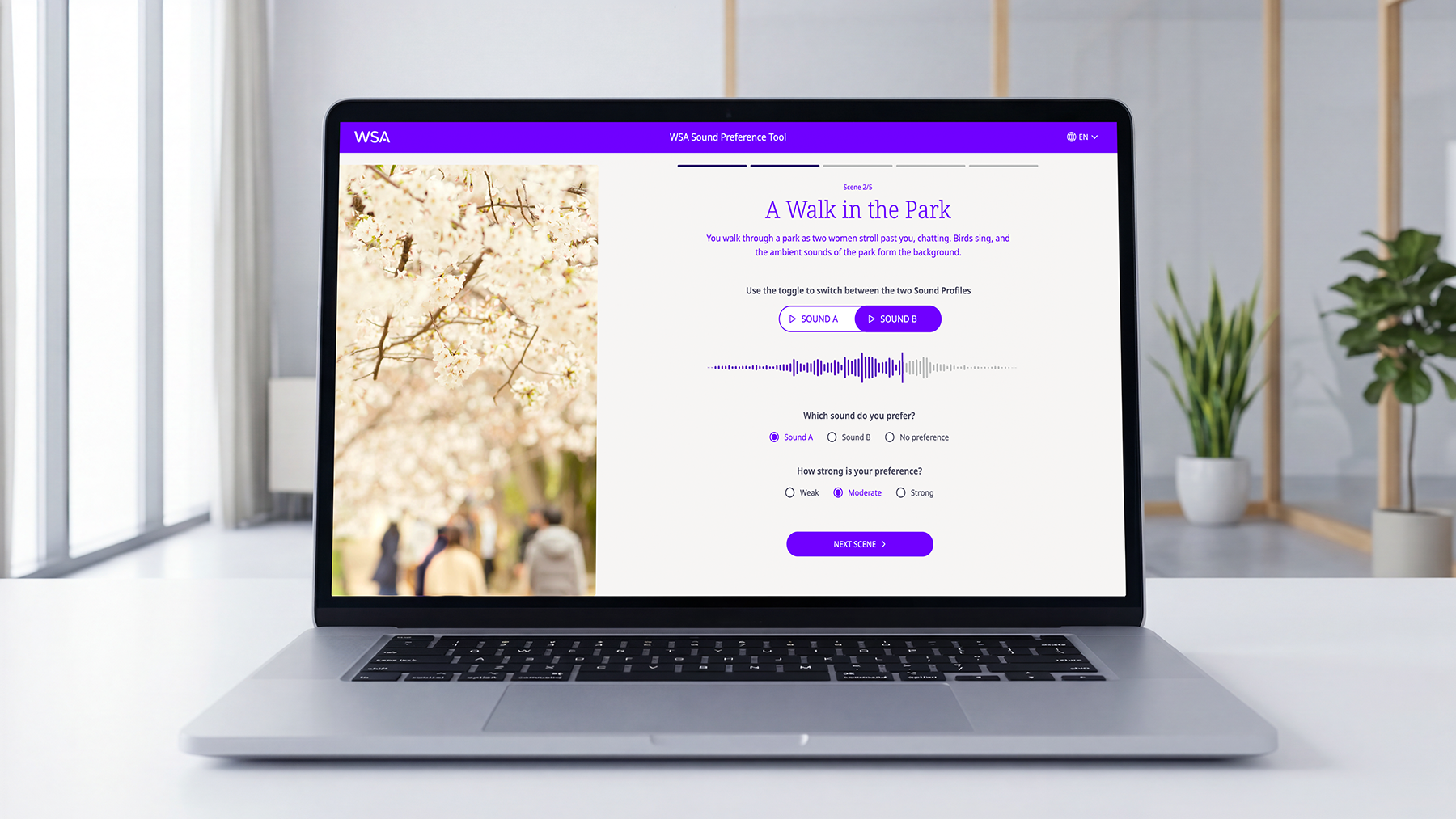
Experience the difference for yourself with the WSA Sound Preference Tool.
Explore both sound processing approaches across a range of everyday listening scenes and discover the one that matches your preference.
Comparative research on two distinct sound processing approaches revealed:
~20% strongly preferred time-domain processing
~20% strongly preferred frequency-domain processing
The remaining group showed no strong preference

Strong preference
Up to 40% of listeners show a strong preference for one type of sound processing over another.

Consistent across environments
Listeners tend to prefer the same sound characteristics across different listening situations.

Listening scenarios can help reveal overall preference
Preferences observed in specific listening scenarios tend to align with overall preference, suggesting that targeted listening comparisons may help guide fittings.

Not predictable
Sound preference cannot be predicted by age, hearing loss, or lifestyle.

Supports truly personalized fittings
Considering sound preference supports more personalized fittings and may improve comfort, acclimatization, and long-term satisfaction.
Want to learn more about Sound Preference?
Visit the Sound Preference hub to access research, evidence, and practical resources that support a more personalized approach to hearing care.
- Scientific evidence behind Sound Preference
- Whitepapers, publications, and clinical resources
- Insights into different sound processing approaches
- Tools to support hearing care conversations and fittings
Two processing approaches.
Two distinct experiences.
Digital hearing aids process sound through filter banks that split the signal into multiple frequency bands.
Here, there is a trade-off between time resolution and frequency resolution. Filters that are narrow in frequency provide detailed spectral information but require longer processing windows. Broader filters allow lower processing delay but with less fine spectral separation.
It’s important to understand that neither is universally better. But individual patients may strongly prefer one or the other - and this preference matters.
The two approaches
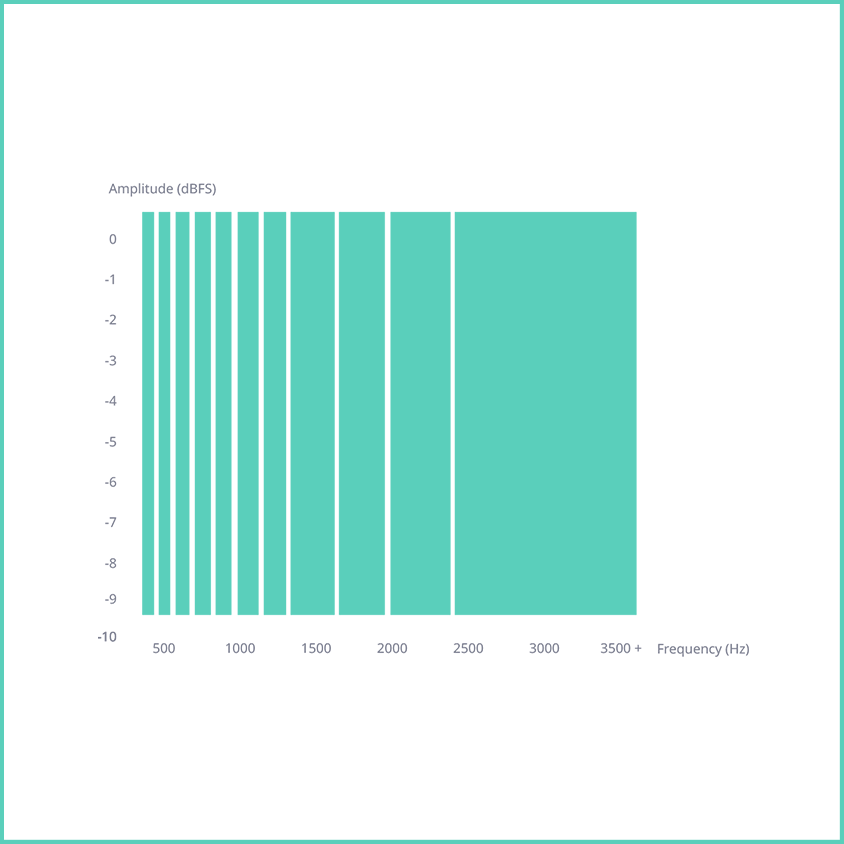
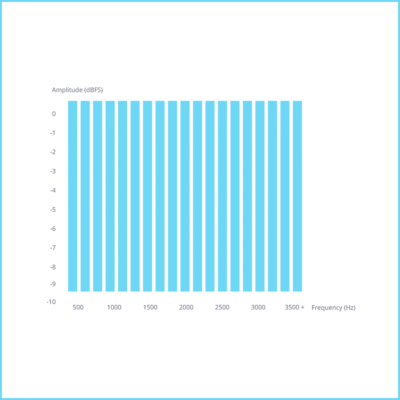
- Variable-width filters mimic the human ear
- Enables low processing delay
Suited to listeners who prefer authentic, more natural sound clarity
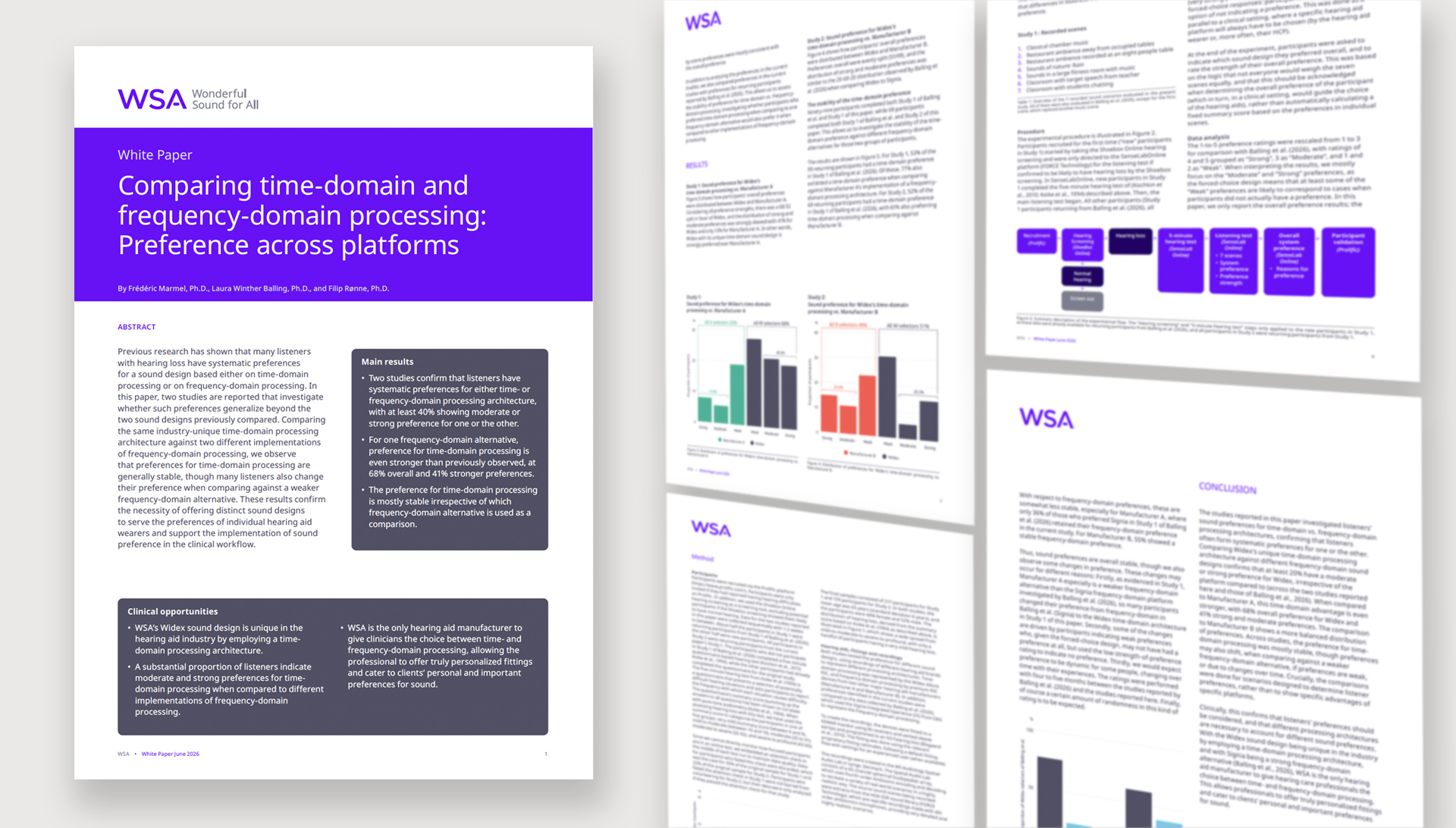
Comparing time-domain and frequency-domain processing:
Explore our whitepaper and see how Sound Preference remains distinct and measurable across different manufacturers' implementations of frequency-domain processing, including:
- Findings from two studies comparing time-domain and frequency-domain processing
- Evidence that systematic preferences appear across different sound designs
- Clinical implications for more personalized fittings and long-term hearing aid use
Denmark
WSA
Nymøllevej 6
3540 Lynge
+45 44 35 56 00